LEDN
Simplifying How Businesses Open a Ledn Account

The Business Problem
Ledn's personal onboarding experience was efficient, but corporate onboarding remained manual, slow, and resource-intensive. Business accounts required extensive coordination between customer experience, legal, and compliance teams, resulting in long activation timelines and inconsistent user experiences.
As Ledn expanded its business and institutional offerings, this workflow became a constraint on growth. Scaling onboarding meant scaling people.
My Role
I led the redesign of corporate onboarding as the product designer on the initiative. I worked closely with customer experience, compliance, legal, and engineering to define requirements, align on risk boundaries, and translate regulatory complexity into a self-serve product experience.
My objective was to reduce operational load while preserving compliance, accuracy, and user trust.
Constraints
Stakeholder Realities
Corporate onboarding required detailed documentation, ownership disclosures, and jurisdiction-specific compliance checks. These requirements were non-negotiable and historically managed off-platform, creating delays, review bottlenecks, and limited visibility for users and internal teams.
Approach
The Product Strategy
I designed a guided, step-by-step onboarding flow that embedded compliance directly into the product experience.
Businesses progress through clearly defined stages: account type selection, company details, ownership disclosure, document submission, and compliance attestations. Requirements are introduced progressively, with contextual guidance and progress indicators to reduce uncertainty and drop-off.
The experience was designed to work seamlessly across desktop, tablet, and mobile.
Product Design
Key Screens
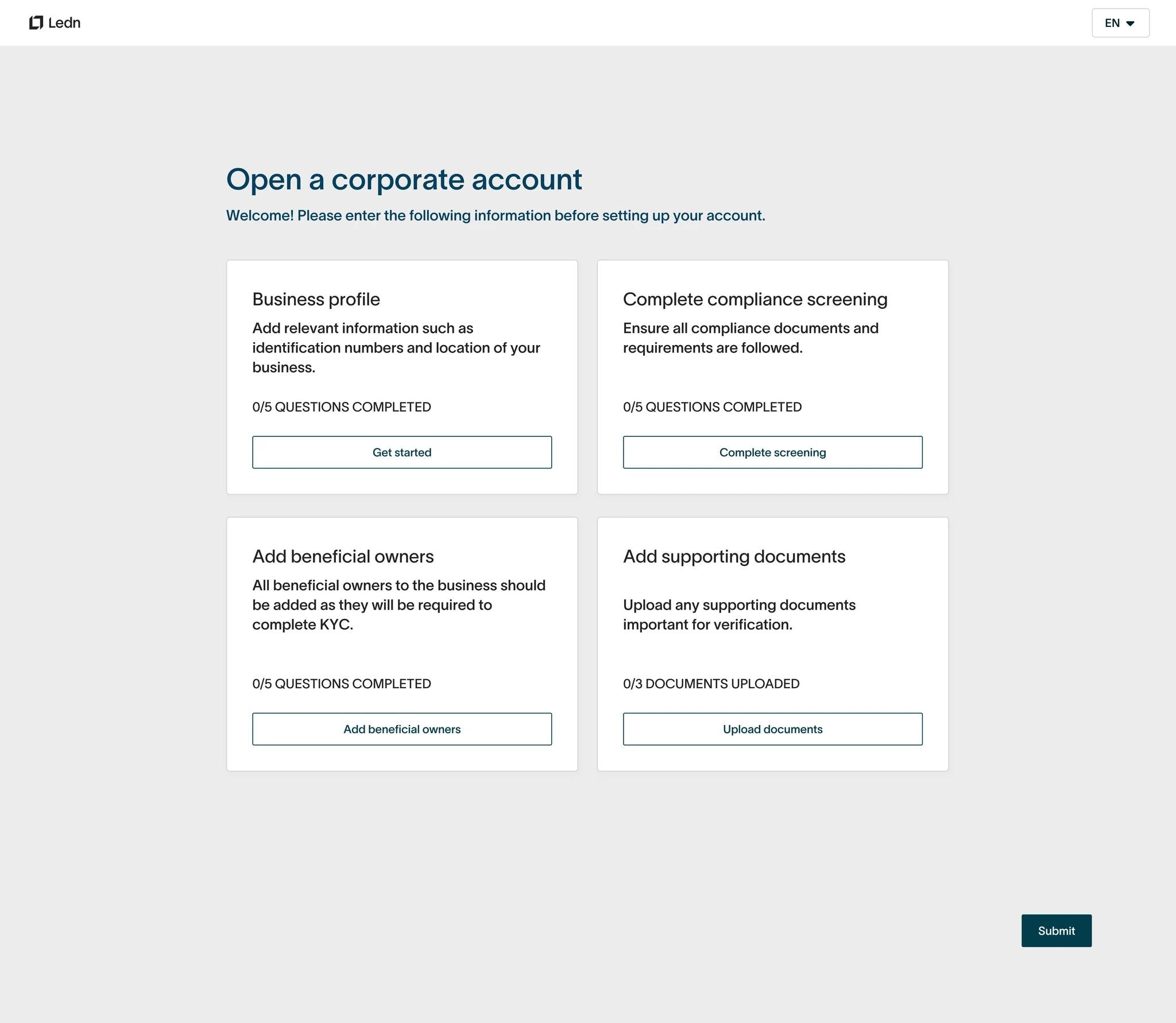
Business account registration, capturing essential information with a clean, trust-driven form
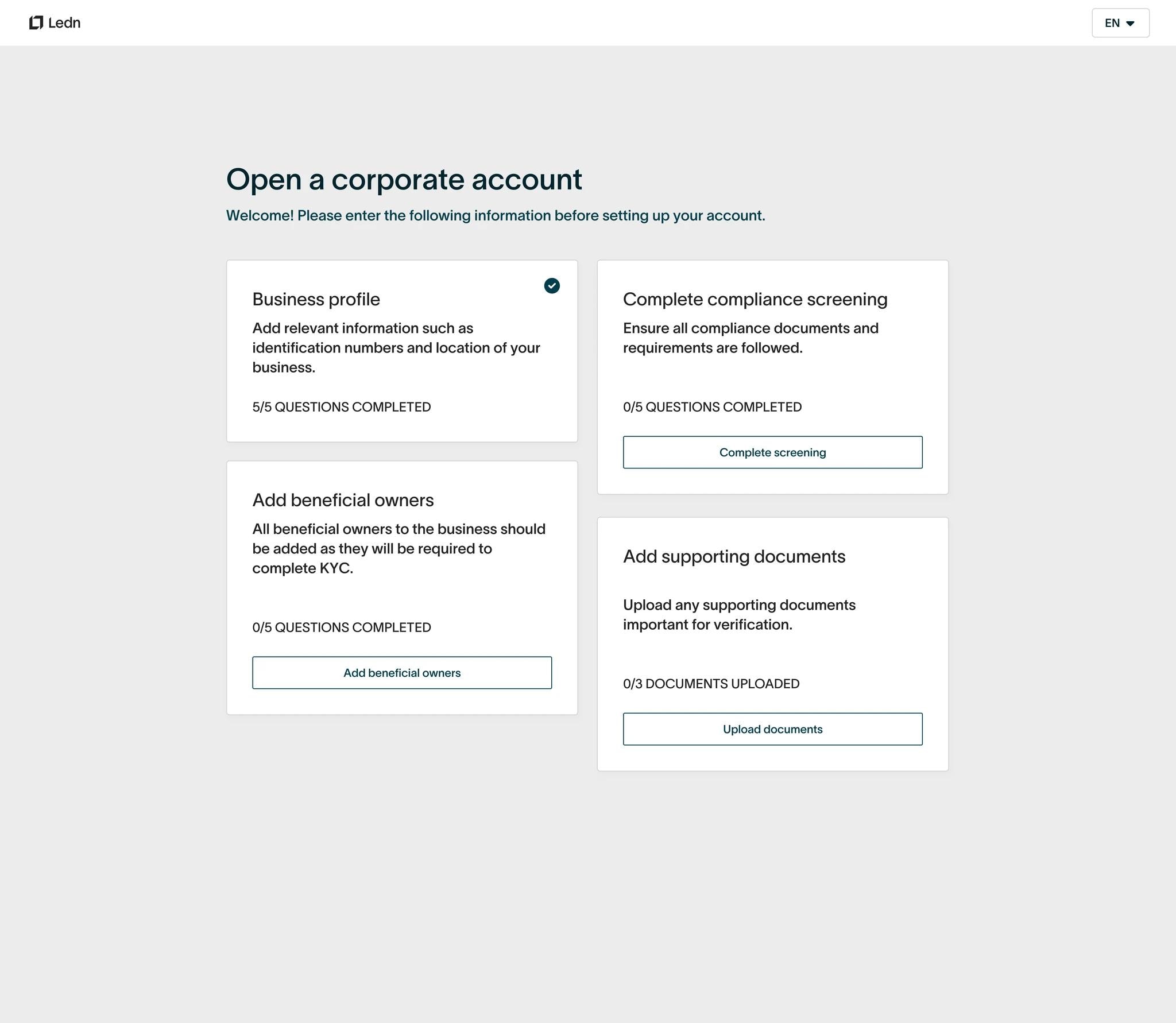
Step-by-step overview of all onboarding tasks with clear progress tracking
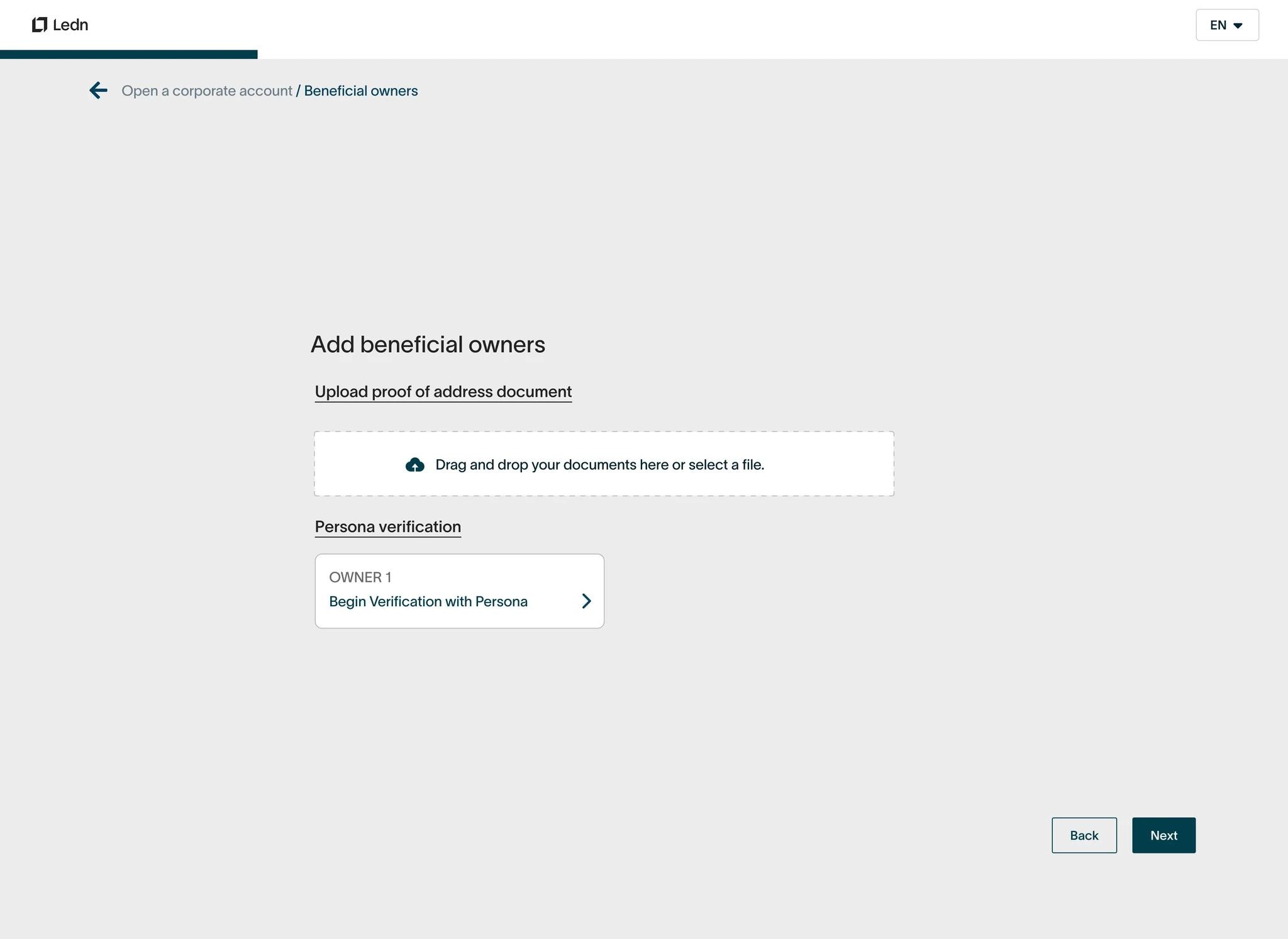
Ownership details and disclosure forms with clear validation cues
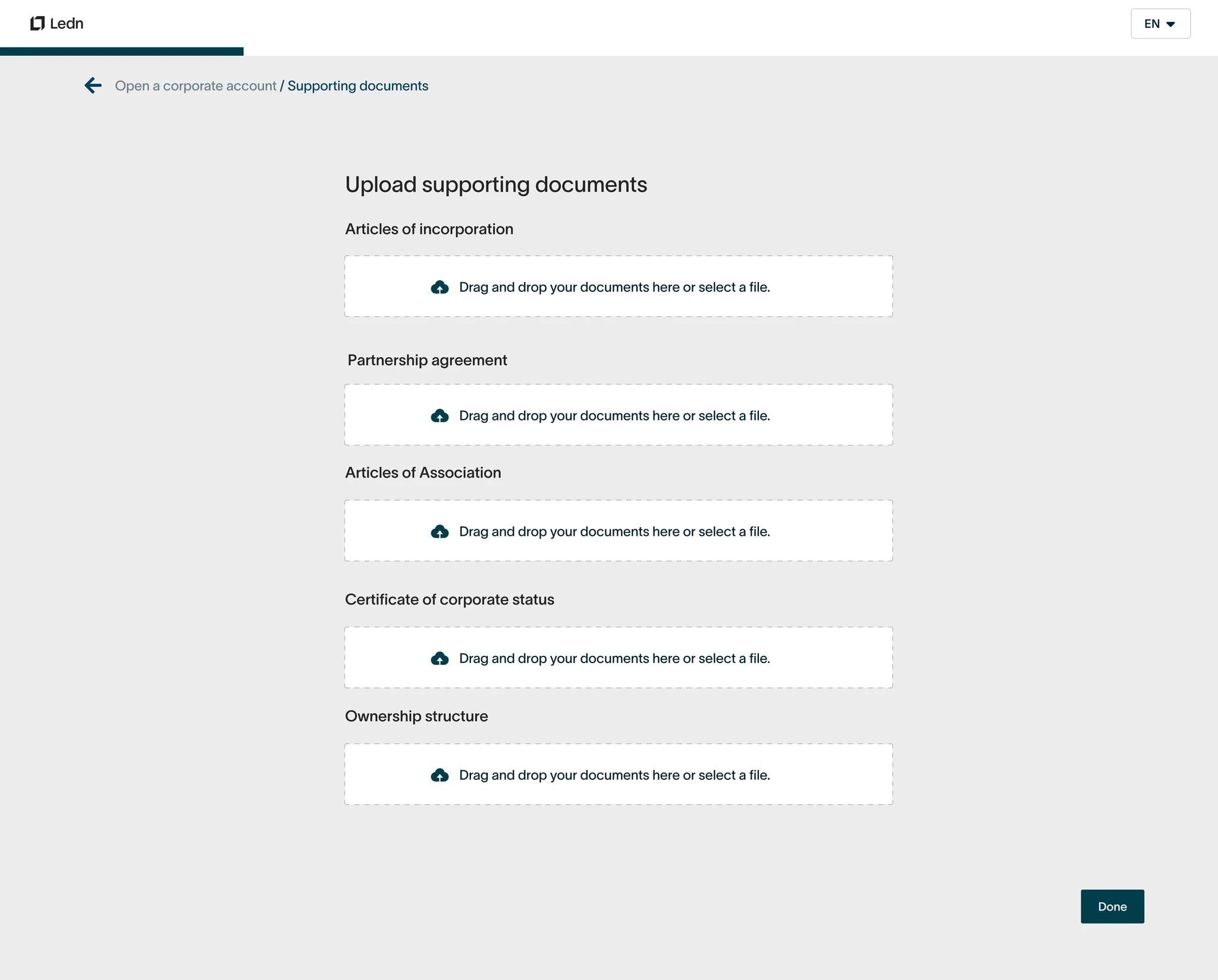
Structured upload flows for articles of incorporation, partnership agreements, and corporate status documents
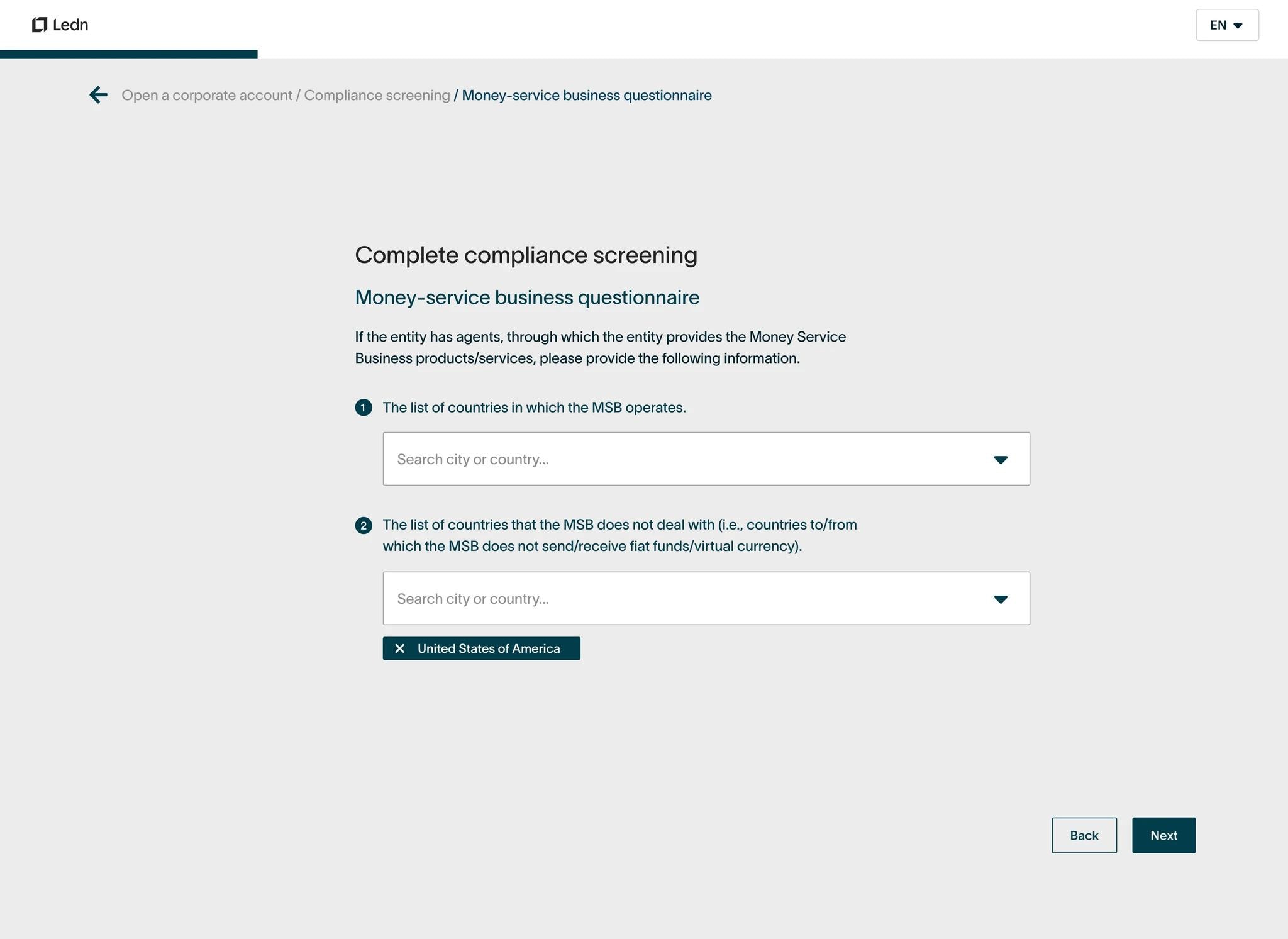
Clear confirmation step before final submission ensures data accuracy
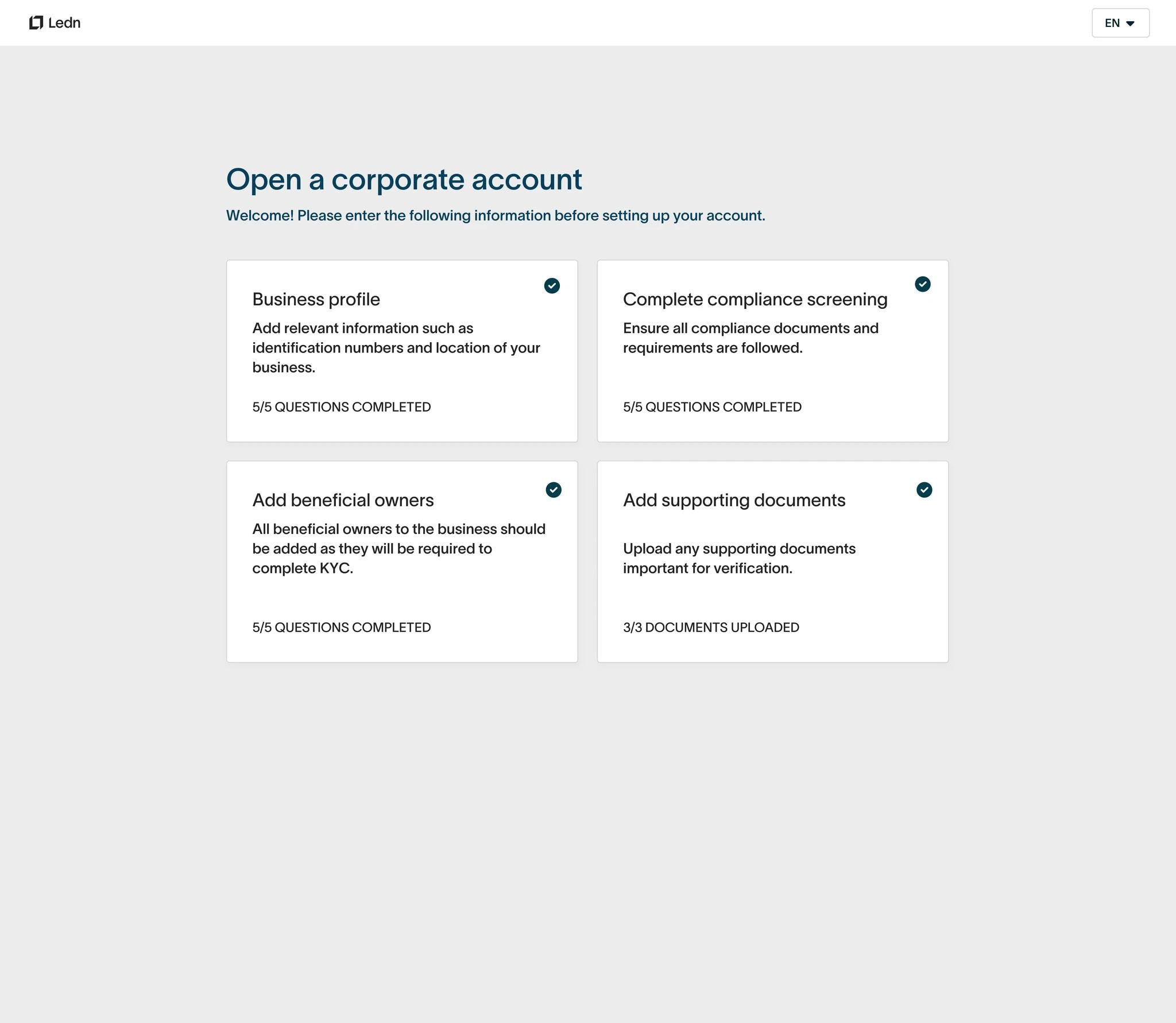
All steps completed and ready for compliance review with full visibility into submission status
Exploration
Before arriving at the final solution, I explored multiple structural approaches to understand how different patterns would serve both user needs and compliance requirements. These explorations were shared with stakeholders to align on the direction that best balanced usability, scalability, and regulatory needs.
Tab Variations
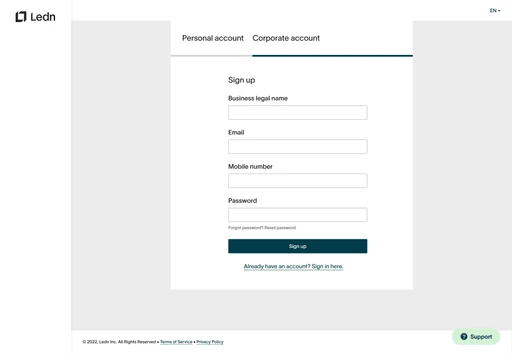
Account Type Selection: Side-by-Side Cards vs. Tabbed Navigation
I explored two patterns for distinguishing personal and corporate account paths. Side-by-side cards offered visual clarity and immediate comparison, while a tabbed interface reduced cognitive load by focusing attention on one path at a time. The tabbed approach was ultimately chosen for its cleaner information hierarchy.
Option A
Stacked Cards
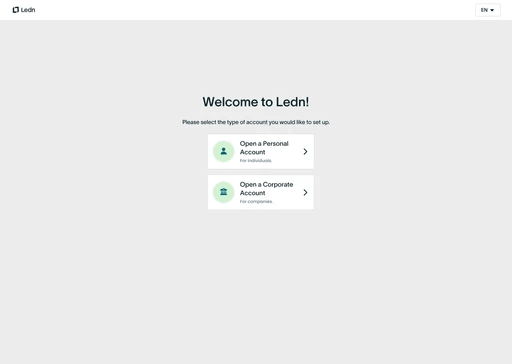
Option B (chosen)
Tabbed Navigation
Forms vs. Step Format
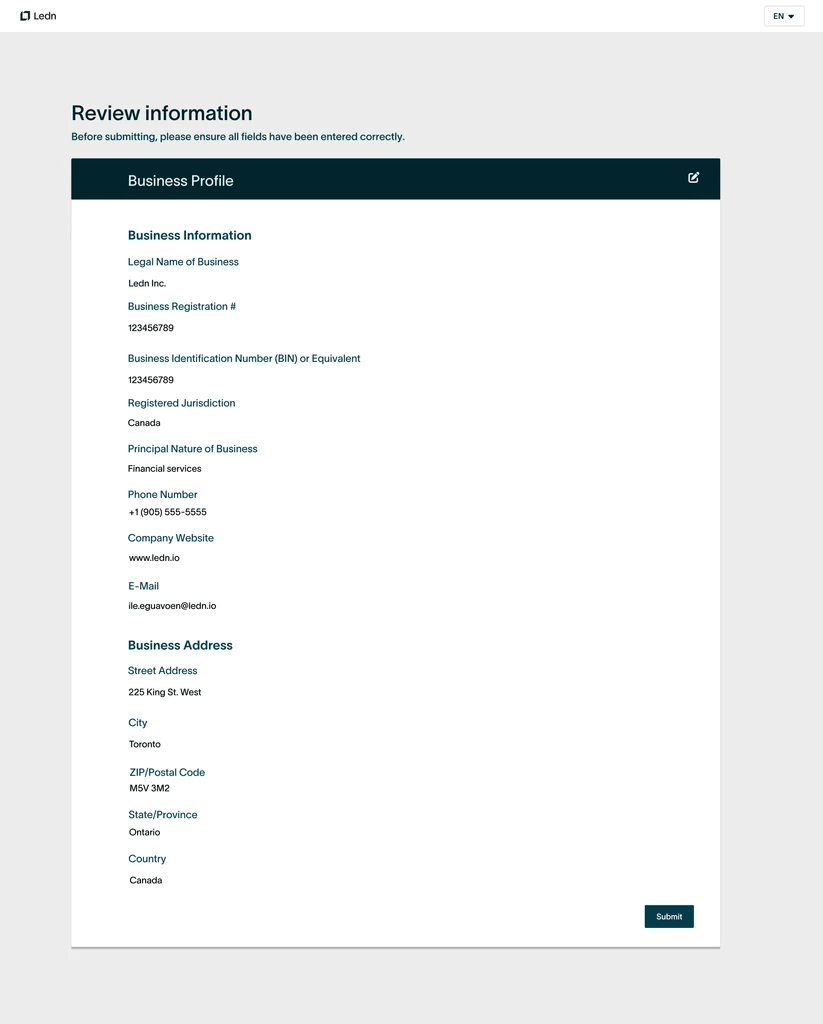
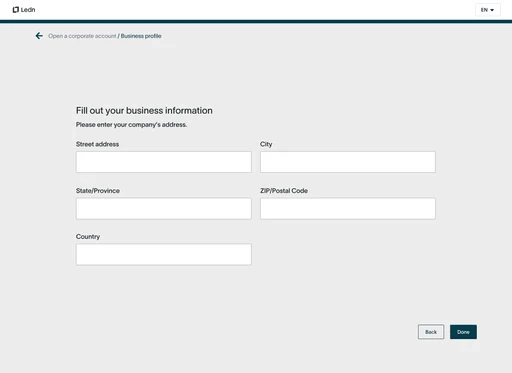
Business Profile: Long-Form Input vs. Progressive Steps
A critical design decision was whether to present business information as a single long form or break it into progressive steps. The long form offered completeness at a glance but risked overwhelming users with 15+ fields. The stepped approach, chosen for the final design, introduced requirements progressively, reducing perceived complexity while maintaining data accuracy.
Option A
Single Long Form
Option B (chosen)
Progressive Steps
Design Decision
The progressive step format was chosen because it reduced form abandonment, allowed contextual validation at each stage, and gave compliance teams predictable data structures for review. Each step maps directly to an internal review checkpoint, aligning the user experience with operational workflows.
Impact
Most importantly, Ledn could onboard corporate clients at higher volume without increasing operational headcount. The onboarding experience now reflects Ledn's premium, trust-driven brand while supporting growth.
Standardized
Inputs across all corporate onboarding, reducing back-and-forth with internal teams
Shortened
Onboarding cycles with more predictable compliance reviews
Scaled
Corporate client volume without increasing operational headcount